Skeleton Gorge: A Comprehensive Guide for Hikers
Skeleton Gorge
Trail Start: -33.98891671823225, 18.434378778597576
Kirstenbosch Gardens, Rhodes Drive
Difficulty: Moderate High
Grade: B
Terrain: gravel, rocks, boulders, chains, and ladders
Hike Duration: 3.5 hours (average one way)
Hike Distance: +- 5 km
Elevation Gain: 612 meters
INTRODUCTION
Table Mountain, one of the New Seven Wonders of the World, offers an array of hiking trails that captivate the hearts of adventurers worldwide. Among these, the Skeleton Gorge trail stands out as a true gem. This hike is known for its challenging climbs, breathtaking vistas, and the ethereal charm of its indigenous forests.
Starting from the serene Kirstenbosch Botanical Gardens, the trail ends at the highest point of Table Mountain, Maclear’s Beacon, or at the Upper Cableway Station. Here’s everything you need to know about conquering the Skeleton Gorge trail.
Fitness Level and Difficulty
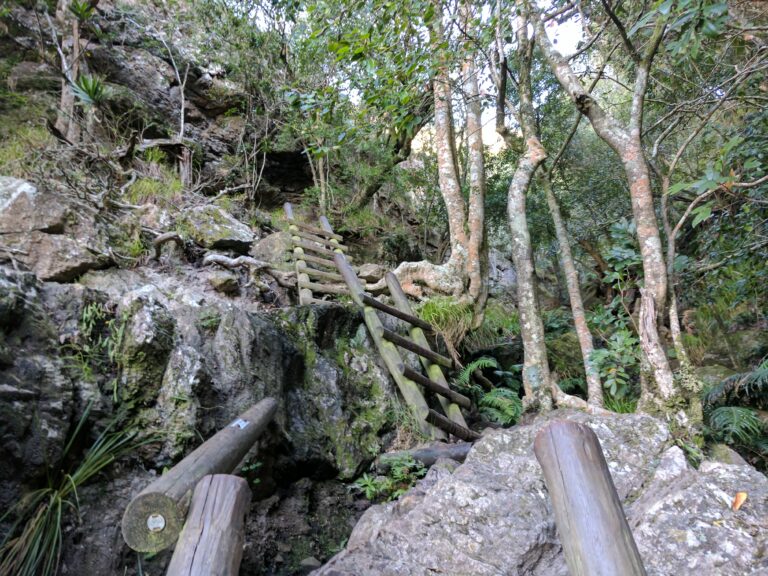
Skeleton Gorge is not a trail for the faint-hearted. The hike is considered of moderate to high difficulty and demands a good level of fitness. The route’s steep sections, wooden and rocky steps, ladders, and areas that require rock scrambling make for a challenging ascent. However, the beauty of the trail and the reward of reaching the top are worth every drop of sweat.
This hike is not recommended for children or first-time hikers due to its strenuous nature. Ensure that you have a reasonable level of physical fitness and hiking experience before embarking on this journey.
The Journey Begins: Kirstenbosch Botanical Gardens
Your adventure begins at the Kirstenbosch Botanical Gardens, which is accessible through various travel options including private transport, City Sightseeing bus, taxis, Uber, MyCiti Bus, and Golden Arrow Bus. Note that entry to the Skeleton Gorge trail requires payment of the Kirstenbosch Botanical Gardens’ entry fee.
The Route and Landmarks
The hike spans approximately 5 kilometers and takes about 2-4 hours one way, depending on your fitness level. As you commence your journey, you’ll walk through beautiful indigenous forests and past intriguing rock formations. You’ll cross streams that become waterfalls after heavy rains, adding a touch of enchantment to the trail.
Halfway through your hike, you’ll encounter “Breakfast Rock,” a landmark and a perfect spot to take a breather and refuel with a snack. As you progress further, the trail becomes steeper and more challenging, leading you to the Hely-Hutchinson reservoir. This man-made body of water in the middle of the wilderness is an unexpected and refreshing sight.
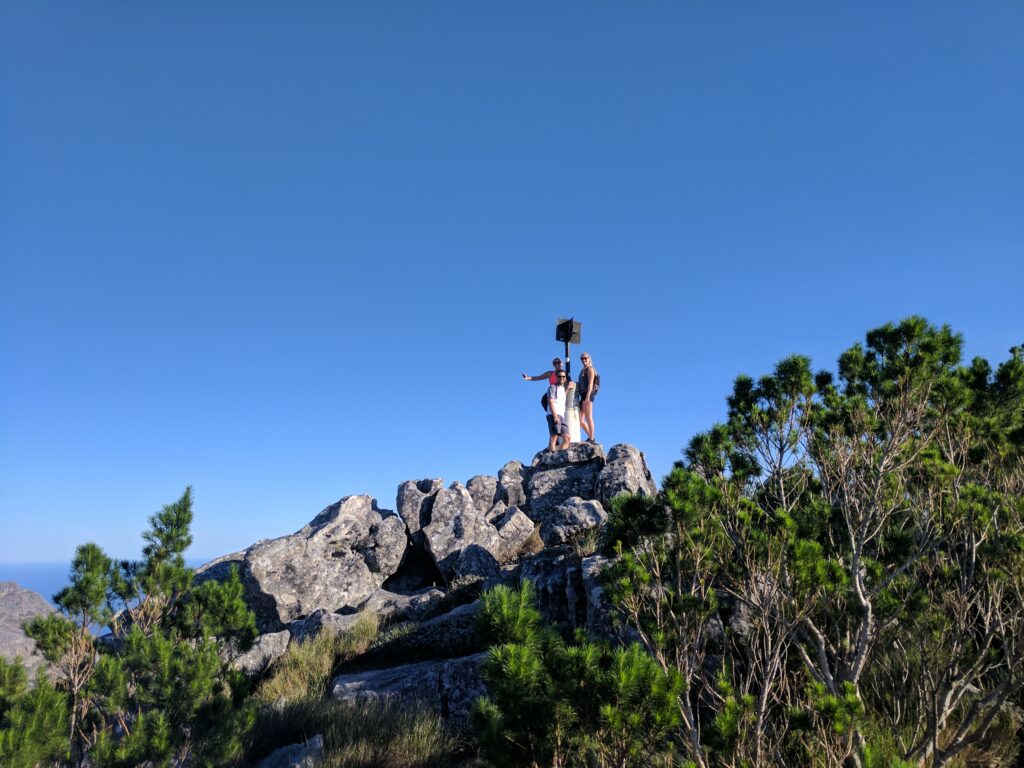
The culmination of your climb is Maclear’s Beacon, the highest point on Table Mountain. Here, you’ll be rewarded with panoramic views of Robben Island, the Atlantic Ocean, and the cityscape of Cape Town.
Essential Items to Bring Along
The unpredictability of Table Mountain’s weather calls for preparation. Carry enough water and snacks for your hike. Appropriate hiking gear, including comfortable and sturdy hiking boots, is crucial. Don’t forget a waterproof jacket or warm clothing to combat sudden weather changes.
Safety Precautions and Timing
As with any hiking adventure, safety should be your priority. Hiking with a companion is highly recommended, as some sections can become quite slippery, especially after heavy rainfall. If possible, engage a guide for the hike. Their local knowledge and expertise can enhance your overall hiking experience.
Plan to start your hike early in the morning. The timing can vary depending on the season, but an early start ensures you’ll have plenty of daylight for both the ascent and descent.
Descent Options
After soaking in the panoramic views at the summit, you can choose different routes for your descent. The Nursery Ravine route and Platteklip Gorge offer a slightly less strenuous descent, while the Table Mountain Aerial Cableway provides an opportunity for a relaxing ride down the mountain. Do check the cableway’s operating hours to avoid missing the last ride down.
Plant life you can expect to see on the Skeleton Gorge trail
Skeleton Gorge boasts a diverse array of flora thanks to the trail’s diverse environments. As hikers ascend, they transition from lush indigenous forest into the unique fynbos biome that dominates the Table Mountain range. Noteworthy species include:
Tree ferns (Cyatheaceae): These giant ferns tower over the path in the lower sections of the trail, creating a dense canopy that gives the gorge its skeletal feel.
Yellowwoods (Podocarpus spp.): These are among the largest and oldest trees in South Africa, and they thrive in the lower, more humid parts of the trail.
Silver trees (Leucadendron argenteum): These trees are endemic to the Cape Peninsula and are particularly noticeable because of their silvery sheen, which comes from fine hairs on their leaves.
King Proteas (Protea cynaroides): The king protea is South Africa’s national flower and a common sight in the upper sections of Skeleton Gorge.
Ericas: There are hundreds of species of ericas in the Cape Floristic Region, many of which can be seen along the Skeleton Gorge trail.
Restios: These reed-like plants are a key component of the fynbos biome, and they thrive in the upper, more exposed parts of the trail.
Geophytes: These plants have underground storage organs that allow them to survive the dry summer months. They are particularly noticeable in the spring when they produce a dazzling array of flowers.


The Mountain Club of South Africa (MCSA)
offers mountain rescue services among its many activities.
Mountain Club of South Africa